

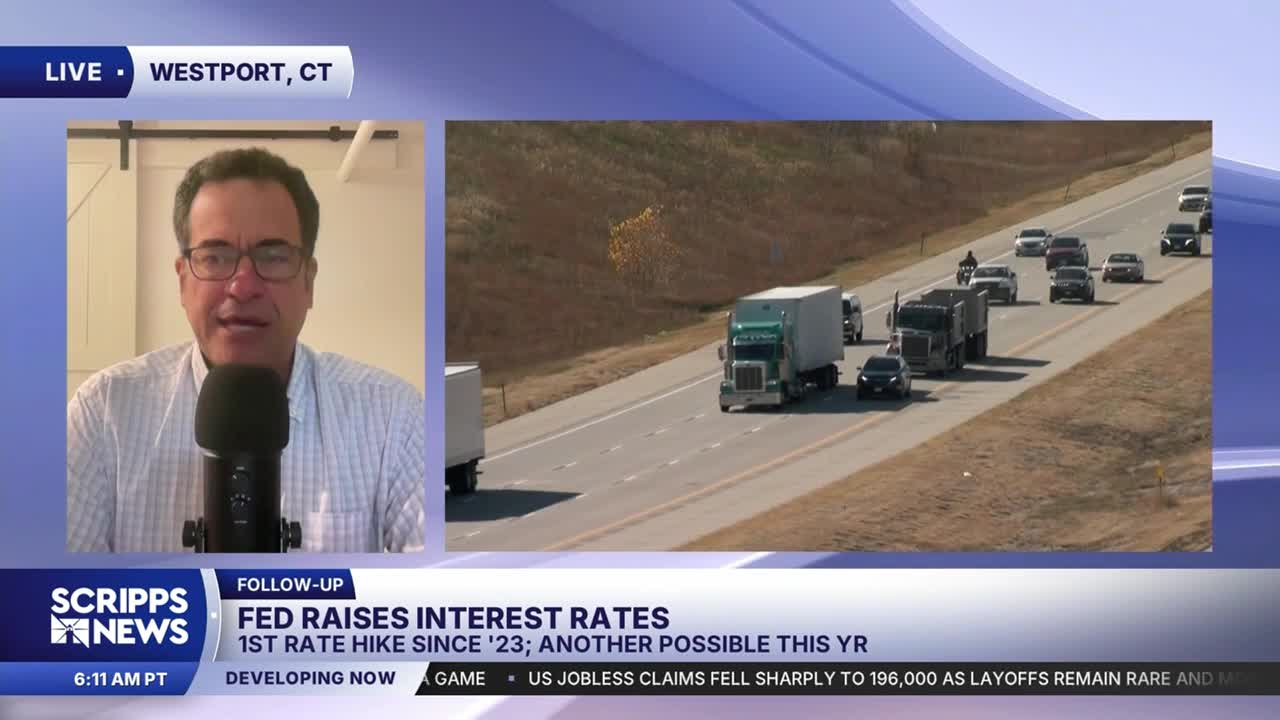


The Federal Reserve raised its benchmark interest rate by 0.25 percentage points, a move that could mean higher borrowing costs for everyday Americans already feeling the squeeze of persistent inflation.
The vote was unanimous. It marks the first rate hike in more than 3 years and returns rates to levels seen in late 2025.
Scripps News financial contributor Danny Moses said the decision, while not a surprise to markets, carries real consequences for consumers.
"Everything's gotten a little bit more expensive," Moses said.
Inflation is running at 3.4% annually. The Federal Reserve targets a 2% annual rate. A stable job market gave policymakers confidence the economy could absorb the hike.
Moses said Americans with variable-rate debt will feel the impact most directly.
"If you have floating rate type of loans like a HELOC, like a home equity loan, that will go up," Moses said.
However, he noted that longer-term loans like mortgages and auto loans are tied to the 10-year Treasury yield, not the federal funds rate, meaning those rates may not move as sharply.
Moses pointed to oil prices as a key driver of inflation and a compounding burden on consumers.
"Oil is feeding into the inflation," Moses said. "It's a double whammy, the fact that oil goes up and hurts people's wallet and then rates follow."
RELATED STORY | Fed raises rates despite pressure from Trump to cut borrowing costs
He said lower-income Americans are bearing the brunt of both pressures.
"Tell that to the lower-end consumer that's already struggling at the bottom half of the K," Moses said. "I completely sympathize with that."
Moses described the U.S. economy as "K-shaped," with wealthier households largely insulated and lower-income households absorbing the most pain. He noted that today, most household wealth is concentrated in the stock market rather than home equity, as was the case during the 2006-2007 housing crisis.
He added that higher rates do benefit those with cash on hand.
"If you're on the sidelines with a billion dollars, you're earning more on your interest," Moses said. "This certainly benefits wealthier people right out of the gate in terms of being able to earn a higher number that's 'risk-free.'"
Moses said another rate hike before the end of the year is possible, putting the odds at 40% to 50%, potentially in December. He said he does not expect the Fed to act in the weeks immediately before the midterm elections.
He said the path forward depends heavily on what happens with oil.
"In a perfect world, the war ends in the Middle East, oil comes down, inflation follows, and the Fed doesn't have to raise rates anymore," Moses said.
RELATED STORY | $5K reality check: Experts say Trump's promise of midterm checks would strain the economy
Moses said the rate hike was ultimately the right call, but warned that rising fuel costs are already showing up in corporate earnings.
"Whether you work at one of these companies or whether you're struggling or whatever, I think it's going to really have an impact on everybody," Moses said.
Interest rates remain 1.5 percentage points below their peak levels in late 2023 and early 2024, when the Fed aggressively raised rates in response to the highest inflation the U.S. had seen in more than two decades.

