

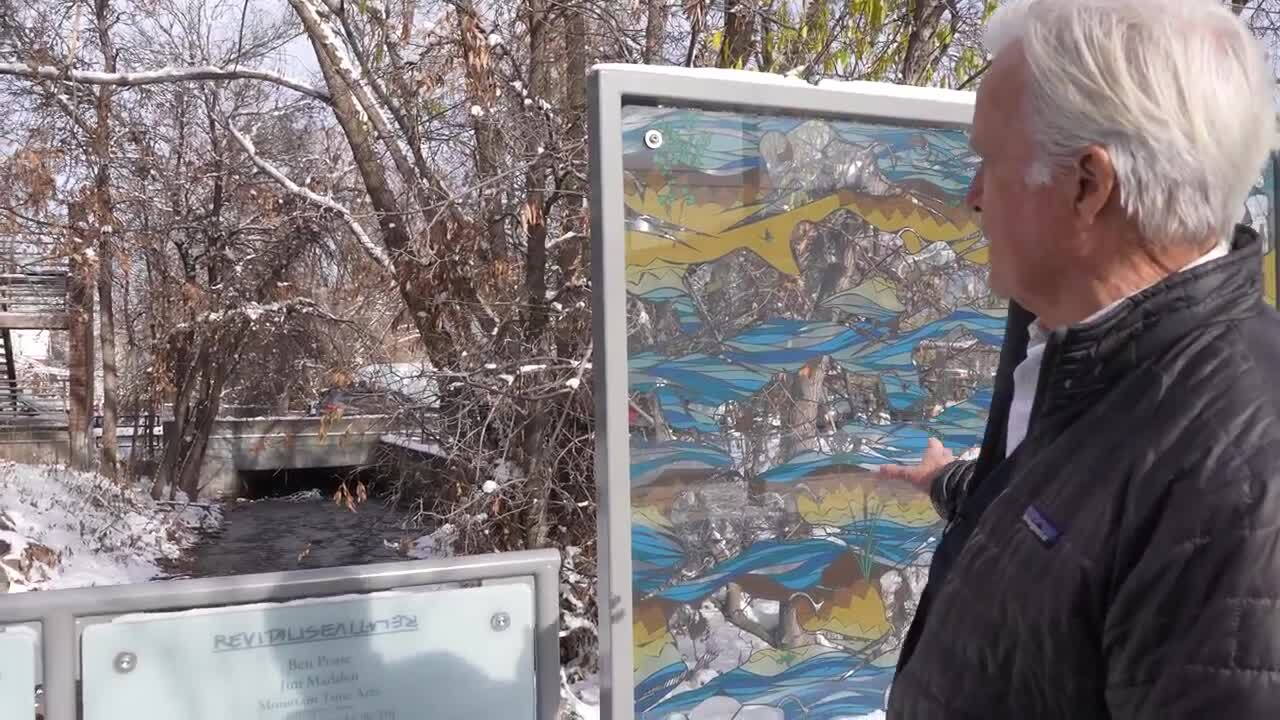


BOZEMAN CREEK, Mont. — For years, Bozeman Creek has flowed through the city, often hidden behind streets, sidewalks and development. A group of local advocates has spent the last several years working to change how the community sees, accesses and interacts with the waterway.
See Bozeman Creek began in 2020, when local artists looked for ways to draw attention to the creek and its history. The effort has since grown into a broader community collaboration involving residents, subject matter experts, city staff and consultants.
Steve Nobel, co-founder of See Bozeman Creek, says the original effort was rooted in recognizing the creek's historical and cultural significance.
Nobel says the creek has gradually become less visible as downtown Bozeman has developed around it.
“Over the years, it's been paved over. It's been bridged over… all kinds of reasons to suppress its presence downtown. So what we wanted to do is to daylight it,” Nobel says.
WATCH WHAT A REIMAGINED CREEK COULD MEAN
For Nobel, the larger goal is to restore the creek's presence and allow it to play a more active role in the community.
“I think the biggest goal probably would be to enable the creek to retain its original spirit,” he says.
The effort has involved regular meetings between the See Bozeman Creek group, city staff and the city's consultants. Community engagement has also helped shape the recommendations included in the vision plan.
Nobel says the group brings together people with different backgrounds and expertise to help develop ideas for the waterway's future.
“We've reached this point where we've brought all these citizens together, and every month or so, the citizens group See Bozeman Creek meets with the city and the city's consultants,” Nobel says.
The vision focuses on several goals, including improving water quality and ecological health, increasing public access, managing flood risks and strengthening the creek's connection to downtown.
One major concept is creating a connected series of creekside parks that extends from Bogert Park down Rouse Avenue and toward City Hall.
The plan also looks at opportunities to make the creek more natural and accessible where surrounding development currently constrains it.
One potential change could take place right outside City Hall. Nobel says the city-owned parking lot could eventually be redeveloped into a public park connected to the creek.
“The property is owned by the city, it could be developed into a park so that the creek and the waterway and the park side is all part of this connection with the community,” Nobel says.
He also envisions the space providing educational opportunities for nearby Hawthorne School students, including opportunities to do science projects alongside the creek.
The parking lot conversion is one possibility within the broader vision.
The City of Bozeman has been involved in the effort for several years. In 2024, the City Commission formally made development of a Bozeman Creek Vision Plan one of its priorities.
Assistant City Manager Jon Henderson says the city wants to recognize the creek's importance while addressing environmental and infrastructure concerns.
“The City Commission actually adopted some priorities and made this idea of a Bozeman Creek vision plan one of those priorities back in 2024. So we've been working towards this vision plan since then and really excited to see this come to life,” Henderson says.
Henderson says the city's goals include improving access, water quality and flood management throughout downtown.
“Our community is very generous and very respectful of our connection to the creek and nature, and we want to do our part in making sure that we're providing good access. We're improving the water quality. We're able to manage flood risk and hazard throughout downtown,” he says.
Community feedback has been central to the process.
“Every single one of the projects and recommendations in the plan was really born from that community engagement. So we're really proud of the community for stepping in on this,” Henderson says.
The vision plan is currently targeted to go before the City Commission on December 15.
If commissioners adopt the plan, the next step would be a 10-year feasibility study. Henderson says that process would break the larger vision into individual projects, helping the city determine what could be done, in what order and at what cost.
Henderson expects 2027 to be a busy year as the city begins working through the details.
The feasibility study would not mean all the proposed changes are approved for construction. Instead, it would help establish a clearer path to evaluate and potentially advance projects over time.
For Nobel and the See Bozeman Creek group, the larger vision is about more than changing downtown's appearance. It's about recognizing the creek as an important part of Bozeman's history, environment and quality of life.
While the work ahead could take years, advocates hope the plan will give the waterway a more visible, connected place in the community.
