

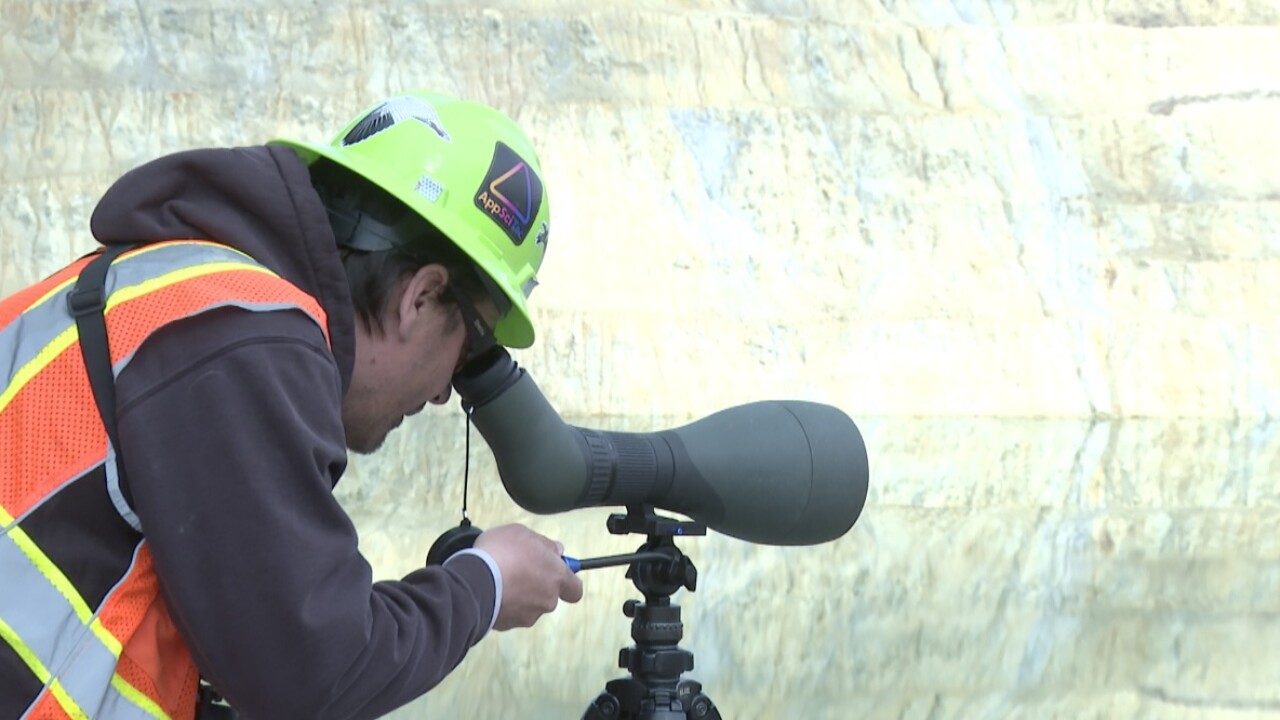


BUTTE - It was 10 years ago when a large flock of snow geese made the unfortunate decision to land in the toxic waters of the Berkeley Pit here in Butte, resulting in the deaths of thousands of waterfowl and receiving national attention. But, since then, mitigation efforts have advanced so that an unfortunate incident like this will never occur again.“It changed my life, really. I feel in love with waterfowl probably atone of the strangest places to do so,” Waterfowl Protection Specialist Mark Mariano said.
Like, this incident has just made you ...
“A duck nerd. You’d hope ... you need at least one duck nerd on your waterfowl program,” Mariano said.
WATCH: Ten years after 3,000 snow geese died in Butte's Berkeley Pit, new hazing tech and forecasting aim to prevent another mass die-off.
The self-described duck nerd started monitoring the Berkeley Pit one year after more than 10,000 migrating snow geese landed in the pit on Nov. 28th 2016. Montana Resources crews responsible for hazing waterfowl off the water were overwhelmed by the massive flock, which remained there for days.
As a result, more than 3,000 birds perished. Those who were there can’t forget the impact.
“It’s hard, I mean, we love birds, right? We love waterfowl, we love birds, we love our community, and, you know, it was a hard event,” Wildlife Biologist Stella Capoccia said.
Fairweather IT has been contracted by the Atlantic-Richfield Company to keep waterfowl out of the pit. They use deterrents such as fireworks, drone boats, and six propane canons that make a ... boom.
“Our success rate is phenomenal. It is over 99.8 percent. To put that in perspective, we had up to 15,000 waterfowl in those years protected from here, successfully hazed out,” Mariano said.
They now study weather patterns and migration habits of waterfowl. The 2016 incident was spurred by the geese running into strong headwinds and frozen lakes, leaving them no options but to land and rest in the pit.
“What you end up having is essentially a perfect storm. There’s a series of events that happened with the snow geese and the weather patterns that really made the event almost inevitable,” Capoccia said.
The new methods make waterfowl managers more confident.
“We have the ability to forecast major migration events. As you can imagine, when you’re protecting waterfowl, knowing when they’re coming is everything. We have come light years from where we started in understanding those dynamics,” Mariano said.
But, don’t get too confident.
“We have a saying in wildlife: The most predictable thing about wildlife is that it’s unpredictable,” Capoccia said.
A presentation about the waterfowl mitigation at the pit will be hosted by CTEC on May 21st at 6 p.m. at the Butte Public Archives.
