




HELENA — Three current and former Republican lawmakers have filed a lawsuit against the major property tax reform passed by the Montana Legislature last year, arguing that the way it was put together and passed violated the state’s constitution.
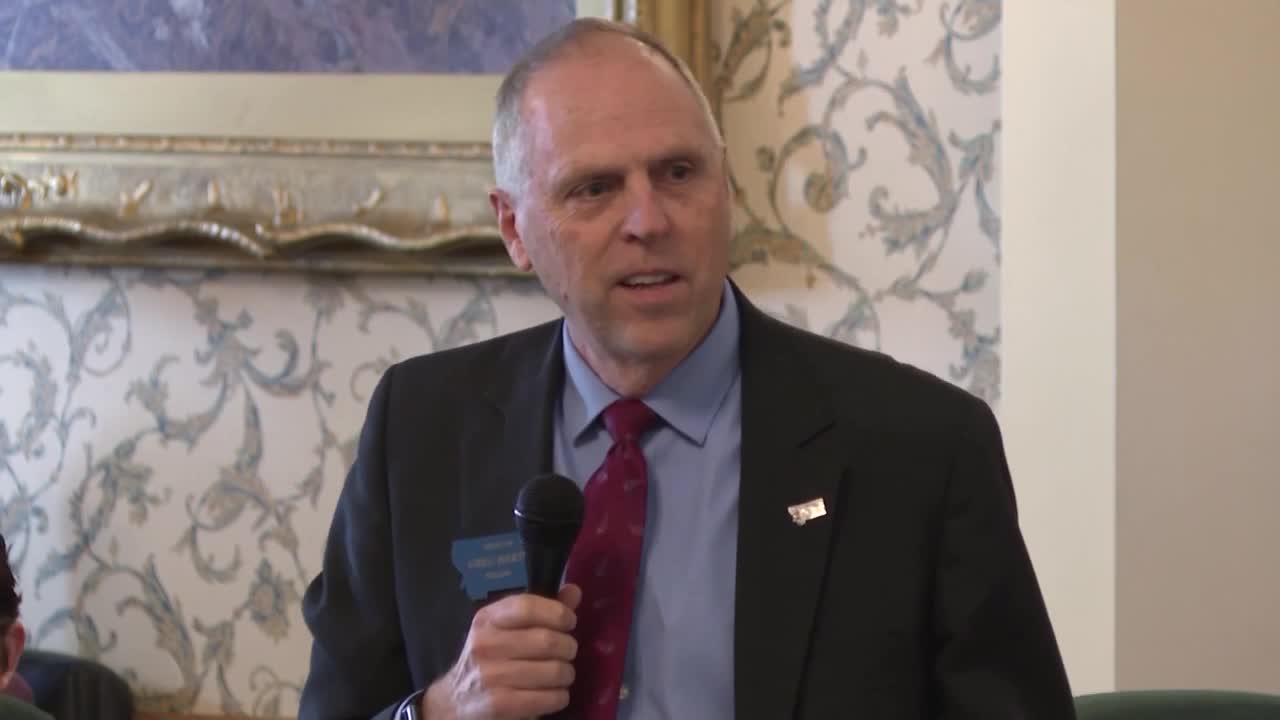
“If we don't stop this and give the Legislature some guidance from the courts, we might as well get rid of that section of the constitution,” Sen. Greg Hertz, R-Polson, told MTN.
On Wednesday morning, Hertz, Senate Majority Leader Sen. Tom McGillvray, R-Billings and former Sen. Keith Regier, R-Kalispell, filed suit in state district court in Gallatin County. They’re particularly focusing on Senate Bill 542, which, together with House Bill 231, completely reshaped the state’s property tax rates.
For 2025, the pair of bills established graduated tax rates – with higher-value properties paying higher rates – and they provided a one-time property tax rebate of up to $400. Starting in 2026, they created a “homestead” tax system, which lowers rates on Montanans’ primary residences, long-term rentals and small commercial properties, but raises them on properties that don’t qualify.
SB 542 was originally a completely different proposal, which simply froze property valuations for two years. However, during the legislative process, lawmakers completely removed that original language and converted it into a vehicle for homestead rates and rebates.
The plaintiffs are arguing that the final version of SB 542 violated a provision in the Montana Constitution that says any appropriation of state money must be done through a bill “containing but one subject.” They said combining millions of dollars in rebates with the new rate structure was an attempt to get votes for policy that couldn’t pass otherwise.
“An appropriation for one-time cash rebates and permanent rate restructuring are oil and water – fundamentally incompatible substances that cannot be constitutionally combined into one bill, no matter how vigorously the Legislature shakes them together,” the lawmakers’ attorney wrote in their complaint.
They also argue the wholesale reshaping of the bill goes against a prohibition on a bill being “so altered or amended on its passage through the legislature as to change its original purpose.”
“That's Washington, D.C., style politics – you know, they have these 2000-page bills that we’ve got to pass it before we know what's in it,” said Hertz. “But that's not how it's done here in Montana.”
The lawmakers are asking the court to strike down SB 542 in its entirety.
Jones had argued during the session that the rebates wouldn’t have been necessary if lawmakers had passed the homestead proposal early in the session, but that the legislation was delayed in the process. He told MTN Wednesday that his comments only meant that adding the rebates was the best way to encourage property owners to take the steps needed to qualify for homestead rates. He said, while the exact language in SB 542 was new, the proposals themselves had been heavily debated throughout the session.
Jones said overturning SB 542 would harm Montana homeowners who don’t have any other recourse at this point.
“I'm concerned that 375,000 homeowners could be the losers – that’s the real risk,” he said.
Hertz said during the legislative debate on SB 542 that he believed it was unconstitutional in its final form. He said the Legislature has taken action before that he thought was questionable under these constitutional provisions, but he believes this was especially egregious.
“I think this particular bill, and there's a couple other bills, went beyond what we have done in the past – but just because we've done it in the past doesn't mean that it's the right thing to do,” he said.
These same provisions were also at issue in a 2022 decision, when a state judge invalidated part of one of Hertz’s own bills, saying that last-minute amendments had changed its original purpose and violated the single-subject requirement. It’s one of a number of recent decisions where Hertz and other Republican lawmakers have accused judges of overstepping on the Legislature’s authority.
MTN asked Hertz about how this case compared with that case.
“I have basically talked about how the courts have overstepped their constitutional limits, but that should apply to the Legislature also,” he said. “So we have overstepped our constitutional limits, and the courts are the ones who are going to have to bring us into following those again.”
MTN reached out to Gov. Greg Gianforte's office for a response to the lawsuit.
“While the governor's office doesn't generally comment on litigation, the governor is proud to have signed the only two property tax bills into law that reached his desk, cutting property taxes for 80% of Montana homeowners,” a spokesperson said in a statement. “If Senate Bill 542 is struck down, property taxes for Montana homeowners will increase significantly, reversing the relief that 80% of homeowners received.”
EDITOR'S NOTE: This story has been updated with comments from Gov. Greg Gianforte's office and from Rep. Llew Jones.
