

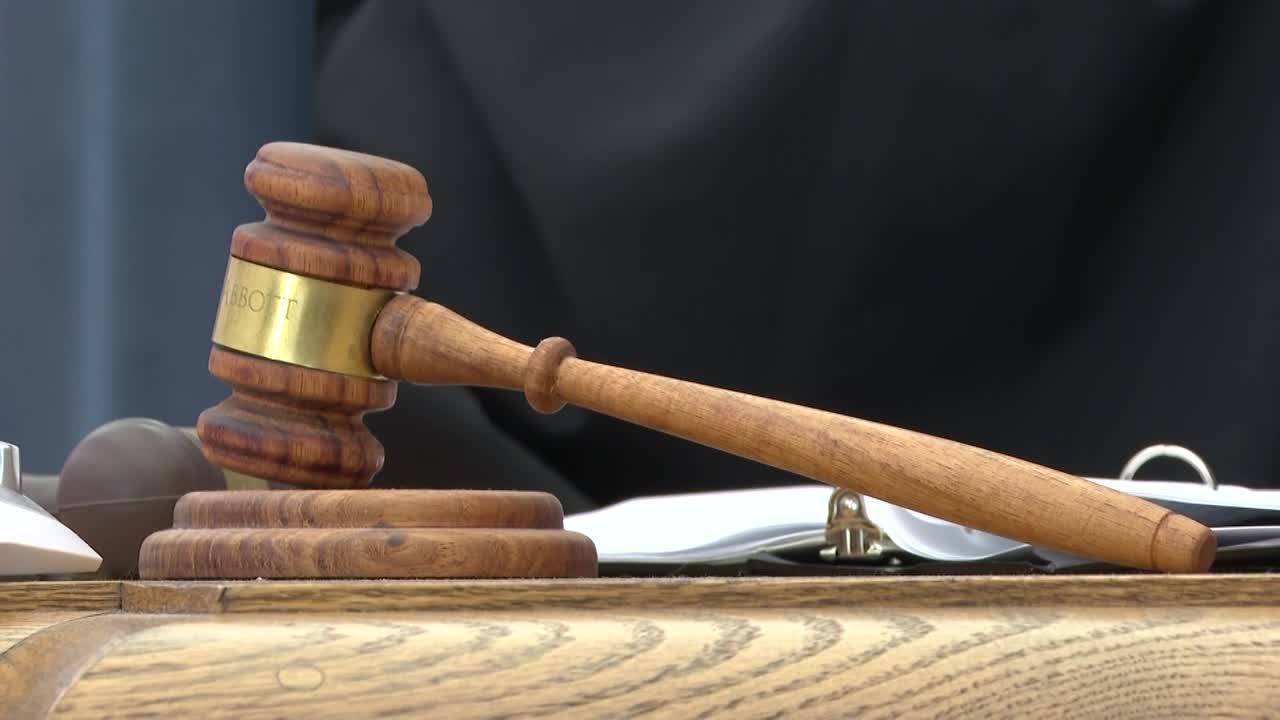



HELENA — Elections for Montana Supreme Court justices and state district court judges have been run on a nonpartisan basis since 1936. Whether the public approves or rejects Constitutional Initiative 132 won’t immediately change that – but it may affect whether the question of how Montana elects judges remains a big political topic going forward.
CI-132 is just one sentence long. It would add a section to the Montana Constitution, saying, “Judicial elections shall remain nonpartisan.” By enshrining that statement in the constitution, it would mean the Legislature could not add political party labels for judicial candidates without another constitutional amendment – requiring a two-thirds majority and approval by the voters.
(Watch the video for a closer look at CI-132.)
Republicans in the Legislature have proposed bills to make judicial elections partisan in each of the last three sessions, arguing that the current system hid information about candidates’ worldviews from voters. So far, all of those proposals have fallen short. However, retired Supreme Court justice Patricia Cotter told MTN it’s too important an issue to leave unsettled.
“If we have partisan judicial elections, which the Legislature tried to enact in the 2025 Legislature, then the person who was elected will be implicitly endorsing the political party platform in order to become a judge – and people don’t want it,” she said.
Cotter, who served on the court from 2001 to 2016, says the vast majority of a judge’s work has nothing to do with political ideology. Even when they consider questions like the constitutionality of laws, she believes judges are not making those decisions based on their personal leanings.
“There were many times on the court when I encountered a law, or we encountered laws, that we didn't agree with – but as long as they were consistent with the constitution, we were obliged to uphold them,” she said. “Judges know that they must make every effort to put politics aside and give everybody a fair playing field and a fair chance.”
Opponents of CI-132 say a judicial candidate’s political views are relevant when voters decide who they want on the bench. They say nonpartisan elections make it hard for the public to make an informed choice.
“I think voters deserve to have as much information as possible about candidates and issues,” said Derek Oestreicher, chief legal counsel for the Montana Family Foundation. “Any time we're putting in our constitution, ‘No, we're not going to allow you to understand this basic, fundamental, ideological preference of a candidate,’ it just doesn't seem like a smart idea.”
Oestreicher argues there’s no reason a judge can’t do the job fairly just because they declare a party affiliation.
“I can be very impartial – completely impartial – and still be partisan,” he said. “What happens with voters is we are conflating the terms ‘partisanship’ and ‘impartiality.’ We all want our judges to be impartial, but there's nothing wrong with judges being partisan.”
The legislative debate over potential partisan judicial elections has arisen during a period when Montana has a Republican governor and a Republican majority in the Legislature, and the courts have blocked a large number of new laws as unconstitutional. Cotter argued that shouldn’t be seen as a sign judges are biased against Republicans.
“When the courts are accused of having a hidden agenda, that accusation comes as a result of being unhappy with a court declaring a law unconstitutional – which is the obligation of the court to do if that's the case,” she said.
Because Montana’s judicial elections are currently nonpartisan, if CI-132 passes, it won’t affect the existing system. However, Oestreicher disagreed with the idea that it wouldn’t be a significant change for the state.
“It's very hard to change down the line if you actually do want more information about judicial candidates, so this this is a radical departure from existing law,” he said.
CI-132 is backed by the committee Montanans for Nonpartisan Courts, which has been running television and radio ads encouraging a “Yes” vote. As of August, the committee has reported significant funding from a number of organizations, including $1.6 million from the ACLU Foundation, $600,000 from the Global Impact Social Welfare Fund, $500,000 from the National Education Association, $500,000 from the Fairness Project, $500,000 from A Better Big Sky, $200,000 from the Justice Project, $100,000 from Planned Parenthood Action Fund and $100,000 from American Opportunity Action.
There is not an active ballot issue committee opposing CI-132.
On Friday, MTN will conclude our look at Montana's statewide ballot measures with Constitutional Initiative 133.
Read the full text of Constitutional Initiative 132 here.
