

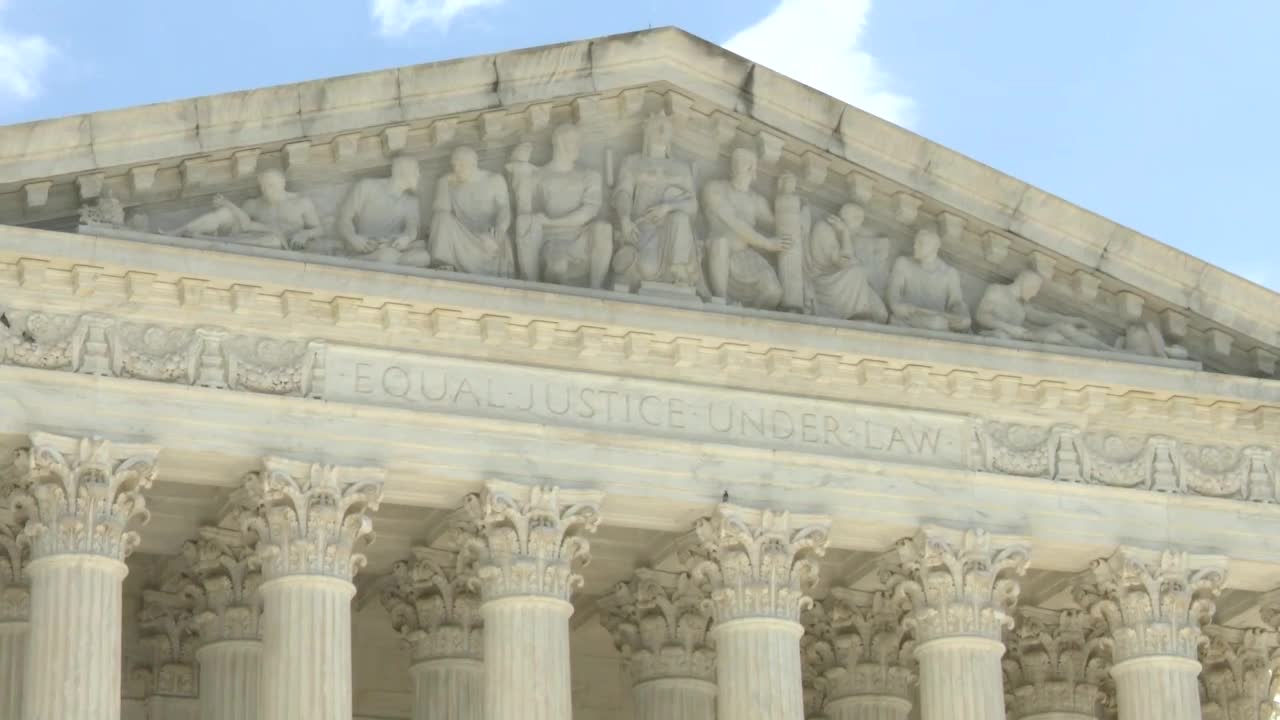



HELENA — The U.S. Supreme Court has upheld state laws from Idaho and West Virginia that prohibit transgender female student-athletes from competing in women’ and girls’ sports. It’s a decision that likely reinforces a similar Montana law passed during the last legislative session.
“This is a good day for Montana, this is a good day for women, this is a good day for our girls growing up and participating in sports,” said Rep. Kerri Seekins-Crowe, R-Billings, who sponsored House Bill 300 in 2025.
(Watch the video for more on how this ruling could affect Montana.)
Seekins-Crowe was in Washington, D.C., Tuesday for a conference when the court’s ruling was announced.
“I just saw it on my phone actually, and was able to celebrate with some other amazing women legislators from around the country,” she said.
The court’s opinion was written by Justice Brett Kavanaugh, joined by the other five conservative justices. They ruled there is a reasonable justification for states to require school sports be divided based on athletes’ sex at birth, in light of general differences in men and women’s athletic capabilities. Kavanaugh said states were not required to consider transgender athletes who’ve already undergone hormone treatment differently, and that the courts were not the right place to debate these policies.
“The legislatures and the schools are better equipped—and under the Constitution, are the more appropriate entities—to assess the competing medical and scientific considerations and draw appropriate lines,” Kavanaugh wrote.
The three liberal justices, in an opinion written by Justice Sonia Sotomayor, dissented, arguing the transgender athlete who sued over West Virginia’s law should have had an opportunity to demonstrate they wouldn’t have an unfair advantage.
“At this point, however, neither the District Court nor the Fourth Circuit has passed upon any of the available evidence or made the necessary factual findings about the state of the scientific debate,” Sotomayor wrote.
The court’s decision doesn’t say states can’t allow transgender athletes to participate. At the moment, it leaves the issue to individual states’ policies.
Montana’s HB 300 defined it as discrimination for a public school or college to allow someone born male to compete in women’s and girls’ sports or use women’s or girls’ locker rooms. It passed on party-line votes, with all Republicans in favor and all Democrats opposed.
Seekins-Crowe and other supporters said the law was a way to protect women’s access and ability to compete in sports. Opponents said it was an attack on transgender Montanans.
HB 300 followed 2021’s House Bill 112, another bill seeking to keep transgender female athletes out of women’s and girls’ sports. The Montana Supreme Court found HB 112 unconstitutional as applied to colleges and universities. However, HB 300 has not been challenged in court so far.
Around the time Seekins-Crowe introduced HB 300, President Donald Trump issued an executive order banning transgender athletes from women’s and girls’ sports. Since then, the NCAA and the U.S. Olympic and Paralympic Committees have updated their policies for participation to come in line.
Seekins-Crowe says the U.S. Supreme Court’s decision reinforces Montana’s law.
“Women's sports have value in our system, in our society, in our state, and I think that we now can continue to move forward in that place and move forward as states to protect women in women's sports,” she said.
On social media, the Montana Democratic Party referred to the court’s ruling with a thumbs-down symbol and said it “provides legal cover” for HB 300.
While HB 300 isn’t under legal review, another bill Seekins-Crowe sponsored is: House Bill 121. That legislation would require public schools, correctional facilities, other public buildings and domestic violence shelters to designate bathrooms, changing rooms and sleeping areas for either men or women, based on biological sex at birth. A state judge put HB 121 on hold while a lawsuit against it continues.
