

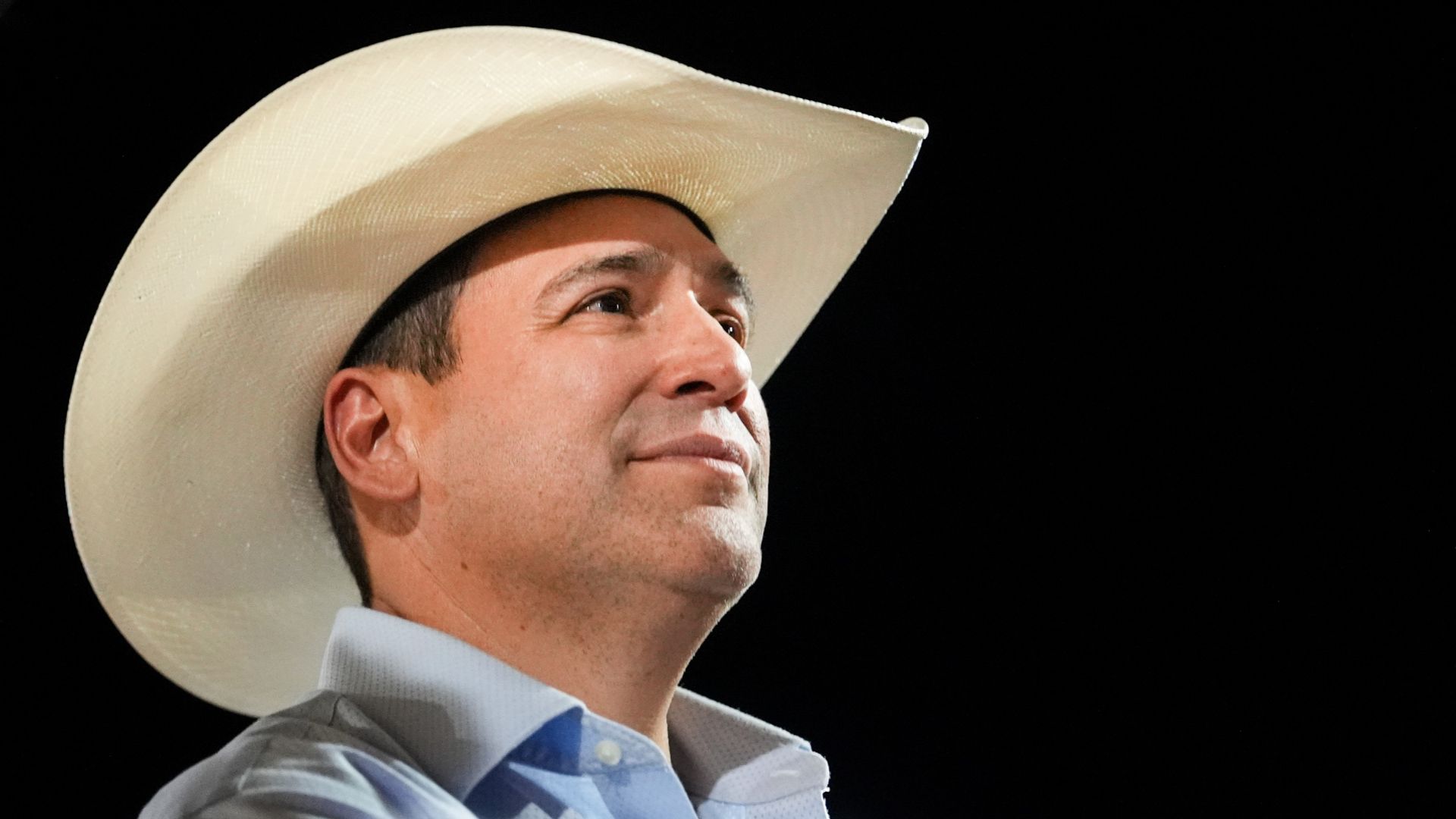


Bobby Pulido, has had an historic November!
On election night, the Tejano music star celebrated a stunning political victory, flipping a congressional district that had voted for President Donald Trump by 18 percentage points.
Nine days later, Pulido was back in the spotlight, this time at the Latin Grammy Awards, where he picked up his third Best Album trophy before preparing for his next role: representing South Texas in Congress.
“We need to represent and we need to work to use our voices for something else,” Pulido said.
His victory was part of a broader Democratic wave across South Texas, an outcome that could have significant implications for both political parties as they look toward the next election cycle.
Just months earlier, the region had been at the center of a Republican redistricting strategy designed to strengthen the party's position in Congress.
Now, voters have delivered a very different message.
More than a year before the midterm elections, President Trump urged Texas lawmakers to redraw congressional district boundaries in an effort to help Republicans gain five additional seats in the U.S. House.
At the center of that effort was South Texas Congressional District 34, the focus of the Scripps News special report, “Cracked.”
RELATED STORY | Cracked: In South Texas, new Congressional lines divide neighbors
To understand the impact of the new boundaries, Scripps News traveled nearly 200 miles across the region, spending five days following the newly drawn district lines.
The journey began at a neighborhood church and a street divided by the new boundaries in Corpus Christi, continued through the farm and ranch land of the Rio Grande Valley, and ended at a community health center in the border city of Brownsville.
The reporting revealed how dramatically the new map reshaped communities, sometimes placing neighbors on opposite sides of a congressional district.
The political calculation behind the map appeared straightforward: Republicans were counting on the significant shift toward Trump among Latino voters in the 2024 presidential election to continue.
But when the votes were counted, the results told a different story.
Four of the five newly drawn congressional districts went Democratic. District 34 flipped by a landslide.
The result prompted some observers to describe the Republican redistricting effort as a “dummymander” — a map designed to benefit one political party that ultimately produces the opposite outcome.
“If you were on the ballot with an R next to your name, it was not going to be a good night for you,” said Paul Gottemoller, a political science professor at Del Mar College.
Gottemoller said the results could force Republicans to take a hard look at their political strategy in the region.
“The Republican Party is now having to do a significant look at itself, because not only did they lose South Texas and this district, which they put so much money in, they lost every statewide office that was on the ballot,” he said.
One of the biggest factors behind the election results was a surge in Latino voter participation.
IN CASE YOU MISSED IT | Why 2025 became the year of mid-decade redistricting
For years, political observers have watched South Texas as Latino voters increasingly became a critical constituency in statewide and national elections.
Voto Latino, a nonprofit advocacy organization, has registered more than 500,000 Latino voters in Texas, and spent more than a decade organizing in the Rio Grande Valley.
Beatriz Lopez, the organization's executive director, said the region's voters have always represented an important political force.
“We've always believed that they are a critical voting bloc in the RGV that represents so much of what Americans feel overall,” Lopez said.
This election cycle, that influence was reflected in the numbers.
According to data from the League of United Latin American Citizens, approximately 1.6 million Latinos cast ballots in Texas — nearly double the number who voted in the 2022 midterm elections.
About 400,000 were first-time Latino voters, with more than two-thirds under the age of 30.
Lopez said that younger generation represents a powerful and growing voting bloc that neither political party can afford to overlook.
“Every year 1.4 million Latinos turn 18. It's a young and powerful vote,” she said. “If any party wants to win future elections, you have to talk to these young Latinos.”
The election results raise questions about a central assumption behind the Republican redistricting strategy: that Latino voters who supported Trump in record numbers in 2024 would remain aligned with Republicans in subsequent elections.
The latest results suggest that support was far from guaranteed.
Lopez said Latino voters remain open to both parties, but political support has to be earned.
“It's definitely a sign that they're still up for grabs,” she said. “Democrats just as equally as Republicans have to work for their vote. It's not just checking the box.”
That may be the biggest takeaway from South Texas.
The region's Latino voters cannot be easily defined by a single election, a demographic label or an assumption about party loyalty.
Their political priorities and voting decisions can shift, and the results of this election demonstrate that neither party can take their support for granted.
As Lopez put it: “As we like to say, where the RGV goes, goes America.”
