

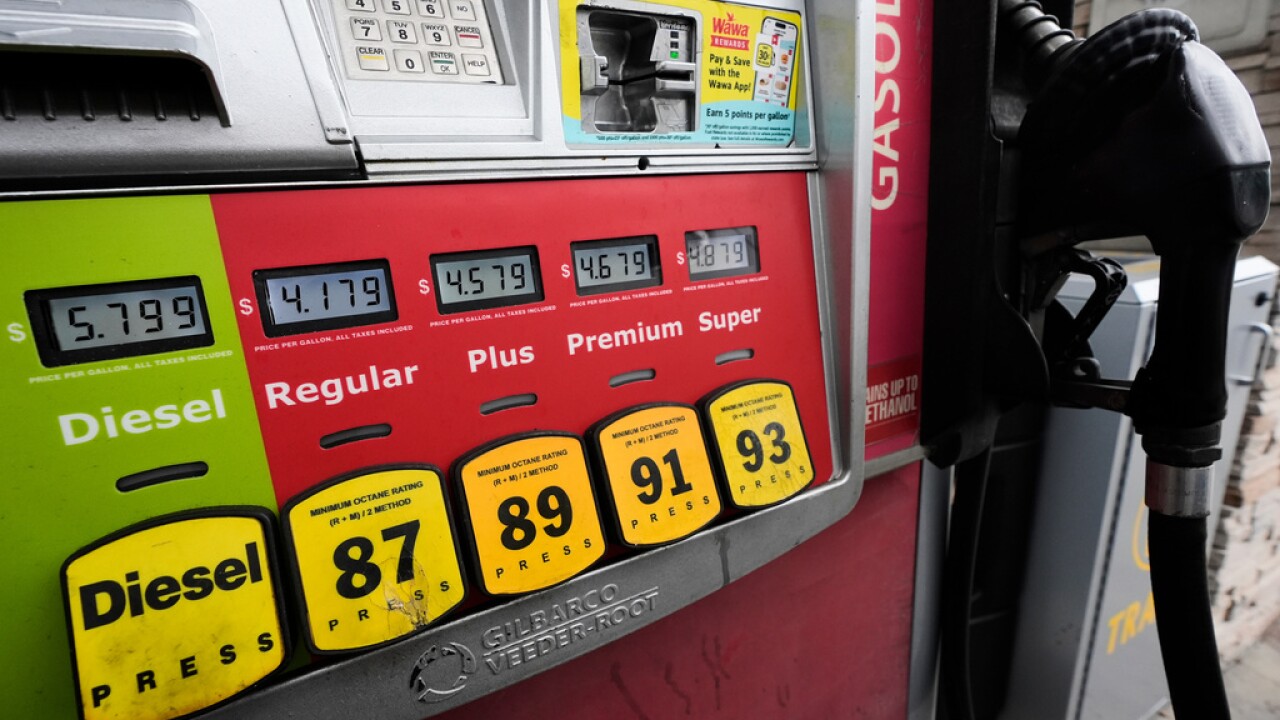

After weeks of war-driven pressure on fuel prices and supply chains, some businesses are starting to pass those higher costs along to consumers via new fees — or through other, less obvious changes.
“Companies tend to look for ways to get more out of what they already have first, like packing more into each shipment or combining orders into a single delivery,” said Rahul Shahani, a partner at McKinsey leading the company’s North American supply chain practice. “Over time, those higher costs still show up in subtle ways like higher free shipping minimums, fewer discounts, smaller package sizes, or slower delivery.”
Jet fuel is one of the biggest inputs for airlines, accounting for around 25% of costs. In the United States, it has spiked by 95% since the war began, according to the Argus US Jet Fuel Index, published by Airlines for America. Additionally, due to closures at some Middle East airports, some airlines are having to take longer routes, requiring more fuel.
RELATED STORY | How high could gas prices go? Record not out of the question
“The reality is, jet fuel prices have more than doubled in the last three weeks. If prices stayed at this level, it would mean an extra $11 billion in annual expense just for jet fuel,” United Airlines CEO Scott Kirby said in a March 20 memo to employees. “For perspective, in United’s best year ever, we made less than $5 billion,” he added.
For now, here’s where customers are seeing breakout fuel surcharges.
Amazon
Amazon announced a temporary 3.5% “fuel- and logistics-related surcharge” for third-party sellers that use their shipping and return services, going into effect later this month. Amazon said last year that these sellers have shipped more than 80 billion products using its fulfillment services.
A company spokesperson did not specify what criteria would need to be met before the surcharge could be removed, but said it would be in place for the foreseeable future.
In order to offset that surcharge, some sellers may opt to raise prices. But shoppers on the site aren’t currently being hit directly with a fuel surcharge.
Delta
Following the lead of other airlines, Delta announced on Tuesday a $10 increase for the cost of checking a first and second bag, bringing the price to $45 and $55, respectively.
“These updates are part of Delta’s ongoing review of pricing across its business and reflect the impact of evolving global conditions and industry dynamics,” a Delta spokesperson said in a statement to CNN.
JetBlue
The airline announced last week it would be raising its fees for checked baggage.
Fees have increased by between $4 and $9, depending on flight times, according to its website. For example, the cost of one checked bag has increased from $35 to $39 during off-peak times and $40 to $49 for flights during peak times, which is typically around holidays and the entirety of summer.
A JetBlue spokesperson tied the charge directly to “rising operating costs.” Adding the fee for an optional service prevents the airline from raising overall fares, a spokesperson told CNN in a statement. The spokesperson did not indicate if the fee was temporary.
IN CASE YOU MISSED IT | Mortgage rates spike near seven-month high on oil prices and Iran war disruptions
United Airlines
Like JetBlue, United Airlines announced it would be increasing the cost of checked baggage. As of April 3, the airline started charging $10 extra for the first and second pieces of luggage, raising the price to $45 for the first and $55 for the second if purchased online 24 hours before the flight.
USPS
The US Postal Service on March 25 said it is implementing its first-ever fuel surcharge on packages, citing increased transportation costs.
The 8% surcharge is temporary and will only apply to packages, not letter mail, according to a press release from USPS. Consumers and businesses will start seeing the fee on April 26.
The USPS said the surcharge will remain in place until at least January 17, 2027, at which time “the Postal Service can determine if a different long-term approach is needed,” according to its website.
UPS, FedEx and other shippers
Long before the war with Iran, UPS, FedEx and other major shipping companies have had automatic fuel charges that kick in when fuel prices hit a certain threshold.
For instance, a fuel surcharge of 21.5% kicks in for FedEx Ground and home deliveries when diesel prices hit at least $3.55 a gallon. As of April 6, FedEx charged a 26.5% surcharge, which is based on the national average for a gallon of diesel for the week prior as posted by the US Energy Information Administration.
Shippers like Maersk have also tacked on additional fees not only to offset oil prices themselves but the higher costs involved with sourcing them and covering longer routes, especially throughout parts of the Middle East.
The-CNN-Wire™ & © 2026 Cable News Network, Inc., a Warner Bros. Discovery Company. All rights reserved.
