


NORTH CENTRAL MONTANA — The House has passed its version of the 2026 Farm Bill, but some Montana producers say the proposal does not go far enough to address the challenges facing family farms and ranches.
The Farm Bill is one of the largest pieces of federal legislation tied to agriculture, touching everything from crop insurance and disaster assistance to conservation, food assistance, rural development and farm policy. The last full Farm Bill passed in 2018, and Congress has relied on extensions since then.
Madison Collier reports - watch the video here:
Walter Schweitzer, president of the Montana Farmers Union and a working rancher out of Geyser, said that delay has left producers waiting for a more meaningful update to federal farm policy.
“So the last time we had a farm bill was 2018,” Schweitzer said. “And they’re supposed to generally be passed every five years. And so we’re right at three to four years past due.”
Schweitzer called the House version a “skinny farm bill,” saying the proposal does not meet the moment for producers dealing with high input costs, lost markets and other pressures.
“In cow country, if we have a skinny cow, she’s generally malnourished or sick, and we cull that cow,” Schweitzer said. “And I think that’s what we need to do with the skinny farm bill.”
Schweitzer said agriculture is already in a difficult position, pointing to tariffs, lost markets, higher fuel and fertilizer costs and farm bankruptcies as concerns he believes the House version does not fully address. He said he hopes the U.S. Senate takes a different approach and addresses what he described as a crisis in American agriculture.
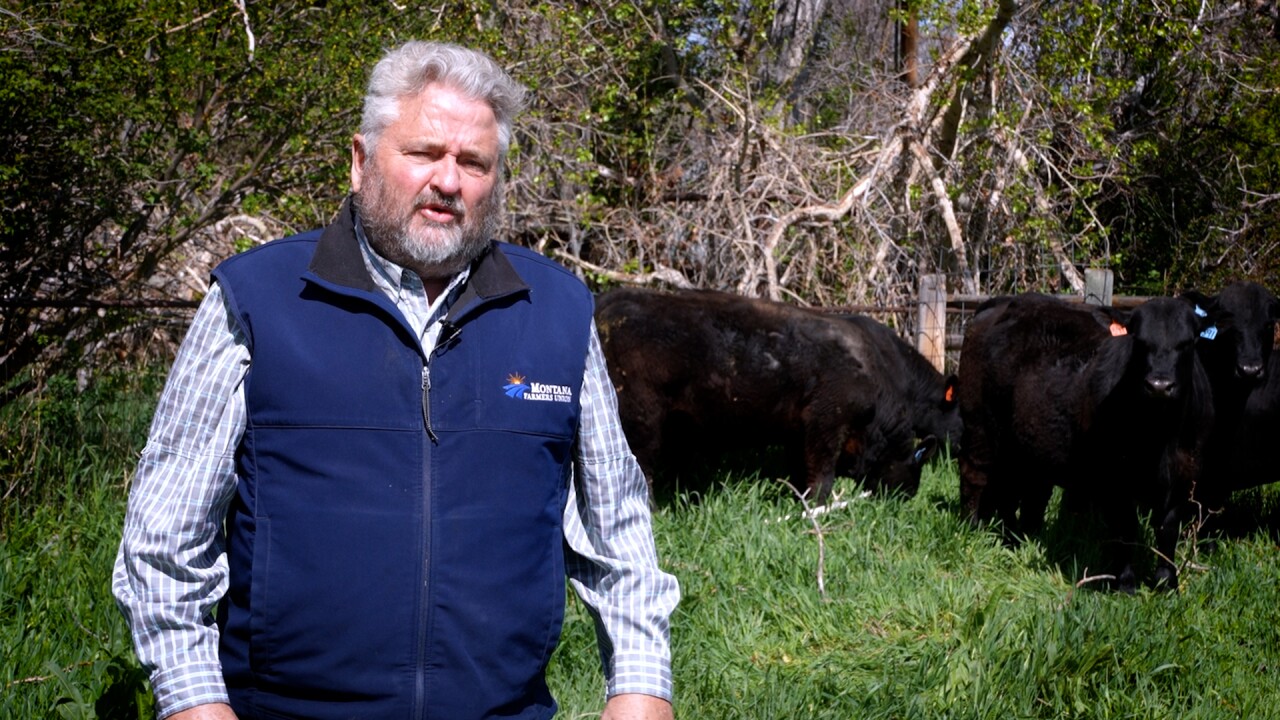
Erik Somerfeld, vice president of the Montana Farmers Union and a working farmer out of Power, said the crop title is one of the most important parts of the Farm Bill for his operation, especially crop insurance and disaster programs.
Somerfeld grows winter wheat, malt barley, spring wheat and safflower. He said drought is always one of the biggest concerns for Montana producers, but rising input costs are adding another layer of pressure.
“It’s easy to be a good farmer if it rains,” Somerfeld said. “If it doesn’t, it’s hard to do anything well, but really, input costs are really bad.”
Somerfeld said fertilizer and fuel prices have made it more expensive to put a crop in the ground and will also make it more expensive to get that crop harvested and delivered later in the year.
He said crop insurance and disaster programs are important, but often function more like a last resort than a full safety net.
“They’re kind of a last resort type setup, to keep a guy going for one more year, but they’re never going to make you whole like insurance should,” Somerfeld said.
Both Schweitzer and Somerfeld said they want to see the Senate version address competition in agriculture.
Somerfeld said the House version largely continues existing policy and does not get to what he sees as one of the core problems facing producers: concentration in the industry. He pointed to chemical suppliers, fertilizer suppliers, seed dealers, equipment manufacturers and the companies producers sell to as areas where he believes there are too few choices.
“We’ve only got a few companies that we sell to, and so they keep what they pay us low, and what we have to pay to produce it stays high,” Somerfeld said.
Another major priority for both producers is mandatory country of origin labeling, often referred to as MCOOL.
Schweitzer said he is not opposed to importing beef to meet consumer demand, but believes beef should be clearly labeled so consumers know where it comes from.
“Let’s just put a label on it so that the consumer can make the choice,” Schweitzer said.
He explained mandatory labeling would create a fairer marketplace for U.S. ranchers and give consumers more transparency at the meat counter.
“I’m not afraid to compete as long as we have a fair marketplace and truthful label,” Schweitzer said.
Somerfeld said many producers are proud of what they raise and want American consumers to be able to distinguish U.S. beef from imported product.
“We want the American consumer to be able to differentiate between good quality American beef and imported stuff,” Somerfeld said.
He said consumers are understandably focused on cost, but believes there is still a market for people who want to know where their food comes from and how it was raised.
For Somerfeld, the Farm Bill is not only a producer issue. He said it affects anyone who eats and has a stake in where food is produced.
“If you eat every day, you’re involved in agriculture,” Somerfeld said. “You may not think it’s important to you, but it is if you really worry about where you get your food from.”
He argued food production is also a national security issue, meaning the country could face larger problems if it loses too many farmers and becomes more dependent on food from other countries.
Schweitzer said Montana Farmers Union plans to keep pushing for changes in the Senate, including mandatory country of origin labeling and policies aimed at supporting family farms and ranches.
Somerfeld said he would also like to see a competition title added to the Senate version, along with MCOOL, to address what he called structural problems in agriculture.
For now, producers say they will be watching the Senate closely to see whether the final Farm Bill does more to address the pressures facing family farms and ranches, and gives consumers more transparency about where their food comes from.
