

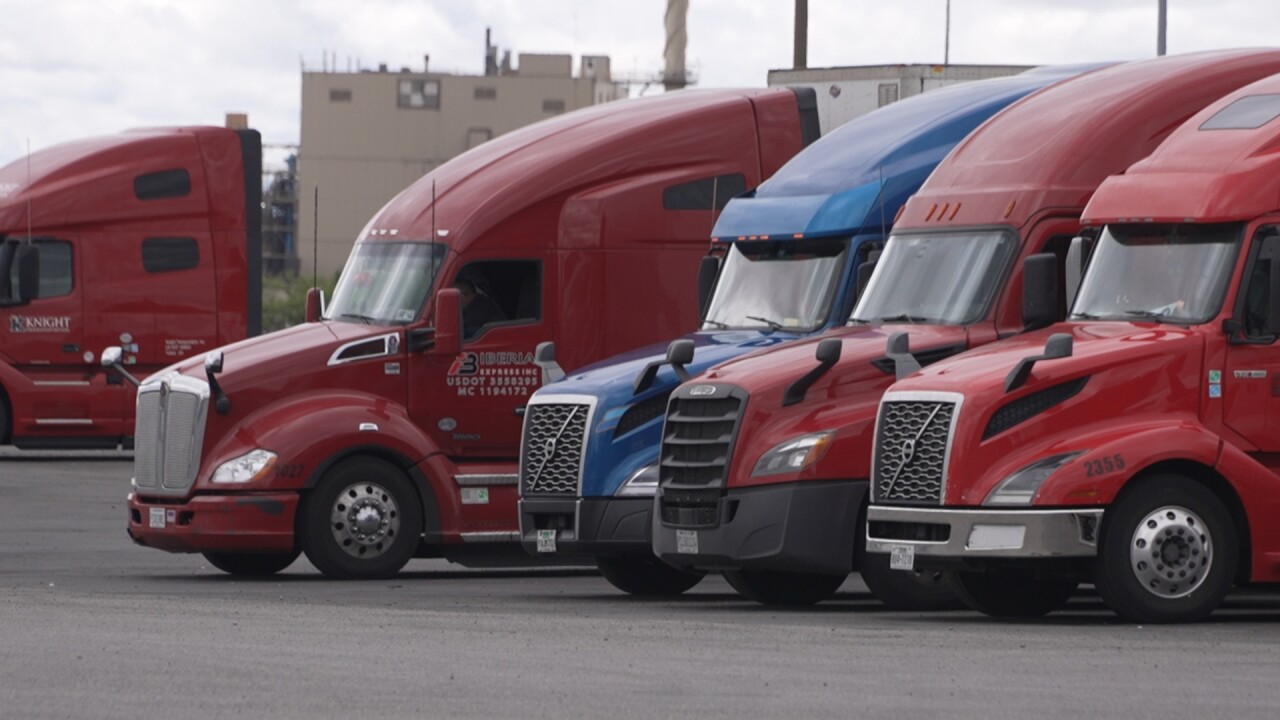

BILLINGS — A recent multi-agency operation along Interstate 90 in Billings that led to the apprehension of 13 undocumented commercial drivers is drawing strong reactions from people across the trucking industry, fueling debate over safety standards, immigration enforcement, and labor practices.
U.S. Border Patrol agents, working alongside Montana Highway Patrol and Montana Motor Carrier Services, inspected more than 300 commercial vehicles during the operation conducted April 27-30 in the Billings area.
Learn more about the operation and what truck drivers had to say:
According to a Facebook post from Border Patrol, the operation resulted in the apprehension of 13 undocumented immigrants driving commercial vehicles. Officials said 12 people were removed from the country, while one case is proceeding under federal reentry prosecution.
Montana Highway Patrol spokesperson Kylie Gibson said two state troopers assigned as task force officers worked alongside Border Patrol agents during routine patrols.

Drivers say crackdowns like this are becoming more common, and many say that is a good thing.
Casey Briggs, a veteran truck driver with 23 years of experience, said he supports the enforcement effort.
"My first thoughts are it's a good thing," Briggs said at a Lockwood truck stop. "If you cannot read or speak English, you can't safely navigate our roads."
Briggs said he has noticed a change on the roads in recent months.
"In the last year since they've been apprehending those guys and getting them off the road, ... I've seen probably about a 98% decrease in semi-truck accidents," he said. "I mean, don't get me wrong, legal people have accidents too, but I don't see as many as I used to. I might see one or two a month compared to three or four a day."
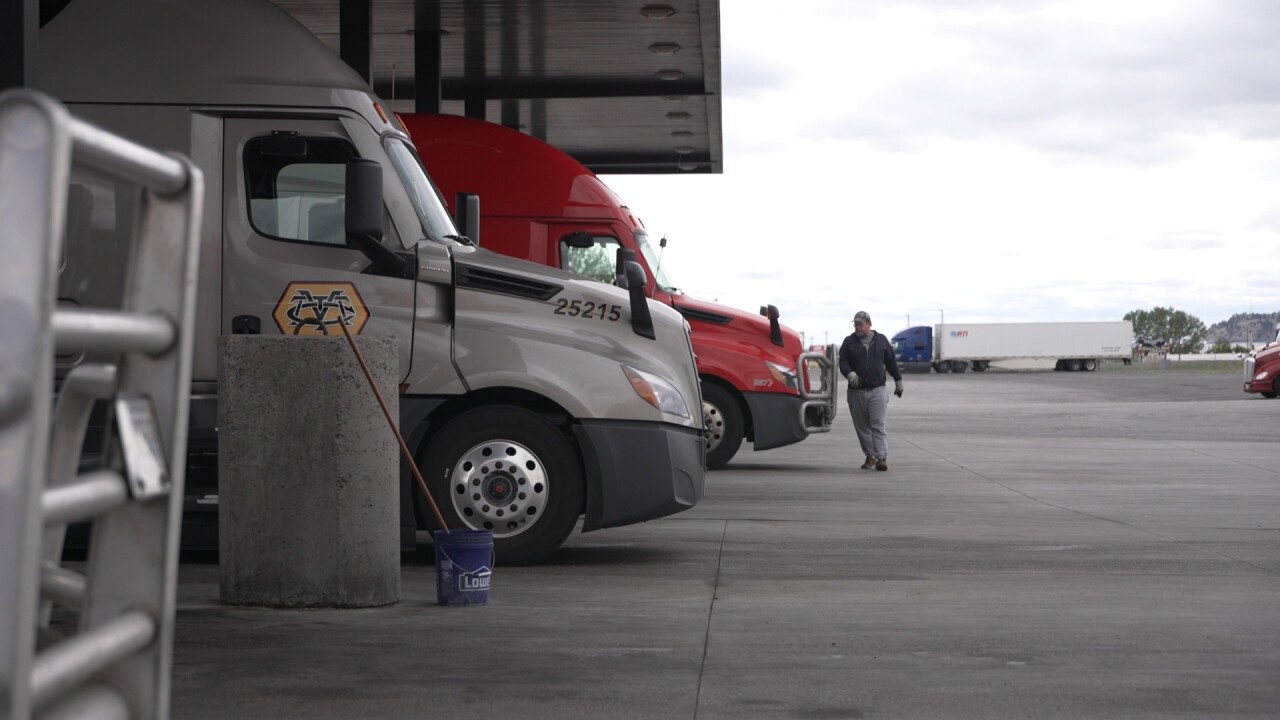
Briggs also reflected on broader changes he has observed in the industry over his career.
"I've been out here 23 years and probably the last 10, 15 years where we've been overran with foreign drivers," he said.
According to the U.S. Bureau of Labor Statistics, roughly 18% of truck drivers nationwide are foreign-born.
In March, the Trump administration announced new restrictions preventing some noncitizens, including asylum seekers, refugees, and Deferred Action for Childhood Arrivals (DACA) recipients, from obtaining commercial driver's licenses, though existing licenses remain valid until expiration.
Federal officials cited 17 fatal trucking crashes in 2025, which they say were likely involved noncitizen drivers. That figure represents less than 1% of fatal truck crashes each year nationally.
Daniel Robertson, owner of Driving Academy in Billings, said enforcement agencies have recently increased inspections not only for immigration violations, but also for commercial licensing and safety compliance issues.
"They have been cracking down a lot, not just looking for illegals, but also people that don't realize they should be having a CDL to pull equipment on, just trailers behind pickups," Robertson said.
Related:Robertson said the numbers from the operation may actually underrepresent the scope of the issue, but he cautioned that enforcement operations do not always result in lasting consequences for those pulled over.
"When you have people that are moving illegally, they're going to be moving at times of day (when) they're less likely to get caught. So, this percentage is lower than the reality," he said. "For the most part, there isn't, I don't think, a ton of oversight once they leave the vicinity of where they got pulled over."
Robertson said he believes many of the regulations receiving national attention now, including English-language requirements for commercial drivers, have been in place for years.
"It's getting to be more and more normal. I don't know why, because it was always the law," he said. "People turned a blind eye, and now we're not doing that anymore as a country."
Related:
Billings trucking company reacts to Trump administration’s English-proficiency requirement for driversOne of Robertson’s students, Danny Huelva, immigrated from the Philippines five years ago and is currently completing the CDL course. He said earning his license represents something larger.
"It's kind of a typical American dream for me to become a truck driver," Huelva said. "I have really prepared a lot for this.”

He described CDL training as rigorous, requiring students to learn inspections, vehicle systems, maneuvering, and safety procedures before earning certification.
"It's really tough because you really have to know a lot of your pre-trip inspection. You have to memorize a lot of components in your truck," said Huelva. “It's a huge responsibility.”
Huelva said he supports strict licensing and safety standards and worries that drivers who bypass legal or training requirements can negatively affect perceptions of immigrant workers who follow the rules.
"I really agree with the whole process," he said. "I think that is very good, that is healthy for the trucking industry because I've heard that there are a lot of people from other countries just coming here illegally, and they just do whatever they want to without undergoing a legal process."
Briggs said he supports targeted enforcement but drew a distinction between commercial operators and others caught up in broader immigration crackdowns.
"I think what they're doing is great. I mean, honestly, if I could talk to President Trump right now, I would ask him to leave the little lady in the burrito truck alone," he said. "She ain't hurting nobody, but the people that are out here operating heavy equipment, it's not good."
Robertson said the industry is still working through the consequences of years of lax oversight.
"We're learning some lessons the hard way about what happens when you try and undercut quality with cheap quantity," he said.
